
How Peacock launched a lower-sodium salt
Topics
Peacock Salt is the largest distributor of salt products in the UK and also the oldest. They supply salt for a vast range of purposes, from food production and fish processing to water treatment and road de-icing. Headquartered in Ayr, they celebrated our 140-year anniversary in 2014.
Why lower-sodium salt?
Customers in the food industry are looking to reduce the sodium content of their products, both to meet demand from their own customers and to prepare for new government guidelines on sodium, to be achieved by 2024.
In response, Peacock decided to develop a lower-sodium salt blend. The aim: to help the food industry reduce their sodium content while keeping the great taste, feel and look of their products.
What we did
Peacock started the project in late 2019, taking on a staff member with a technical background to manage it. Working with University College Dublin, they developed different blends, tailoring the sodium levels to various categories in the 2024 Public Health England guidelines.
To do this, Peacock trialled numerous sodium alternatives, including potassium, magnesium, seaweed, malt extract and others, looking for a blend that would satisfy the criteria on, for example, cost, stability, taste and texture:
- They settled on a blend of sodium, potassium and magnesium.
- Learning along the way included the need to source the alternatives in the same grain size as the sodium chloride. Without this, the mix would separate out.
- Next stage of the journey was sensory testing, made possible by a grant from the Reformul8 project.
Meeting customer demand: sensory testing
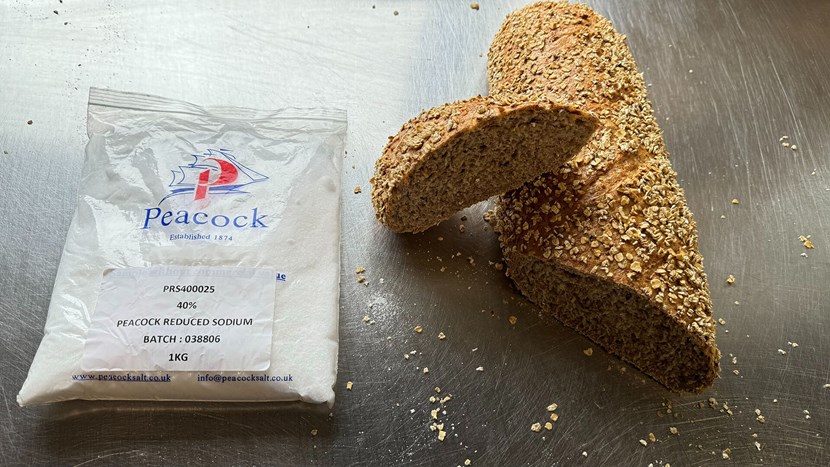
Using a £5,000 award from the Reformul8 Challenge Fund in 2021, Peacock carried out detailed sensory testing with Queen Margaret University (QMU) in Edinburgh. They panel-tested two new reduced-sodium formulations, using them in some of Scotland’s best-loved foods – oatcakes, soup and pastry – and looking at elements like texture, mouth-feel, appearance and taste.
They also ‘road-tested’ the new proposed blends with customers, offering them samples to use for a wide range of foods, such as sausages, bacon, smoked salmon, cheese and much more.
The findings:
- Reaction to the different blends has been highly positive. Businesses with a popular product are always nervous about changing the ingredients, but they are telling Peacock they’d be very happy to use these reduced-sodium blends.
- A smoked salmon producer doing its own reformulation project and sensory tests found that salmon cured with the reduced-sodium blend scored much more highly than salmon using its standard salt mix.
- Peacock originally expected to develop a single low-sodium blend, but realised early on there’s no one-size-fits-all product: sodium reduction is industry-dependant and product-dependant.
- To cater for this, Peacock decided to offer three ‘off-the-shelf’ blends, providing a 20%, 30%and 40% reduction in sodium.
- Peacock will also produce custom-made blends to suit different customer specifications, and will be ready to support customers with samples and sensory testing.
The benefits and learning points
Based on these findings and outcomes, Peacock see two main areas of benefits from introducing these blends, opening up opportunities with both existing and new customers:
- businesses that want to adapt existing products to fit the 2024 sodium guidelines.
- businesses that want to launch ‘healthier options’ products.
With both types of business, the reduced-sodium blends are opening new doors for Peacock – in many cases with big players. For that reason alone, Peacock would certainly recommend other companies to look at their own reformulation journeys, whatever their sector or reformulation goal. Some of their own learning points could help with that:
- Do the research. Peacock could have gone out and replicated the solutions already in the market, but they wanted to do something different. Getting technical, science support in-house and from the two universities gave them the confidence and focus to complete this project – even when the pandemic introduced numerous practical complications.
- Be open. Talk to your customers and see what they want. Let the results guide what you do, and don’t limit yourself by pre-deciding anything. As you go along with the project, you will discover things you didn’t expect at the start, and your failures can be as useful as your successes in this.
- Keep on learning. Though Peacock have brought new products to market, this journey is far from over. Over the next couple of years, they expect to gather more experience and feedback about which blends work best in different products. New alternative ingredients may also come onto the market. If they see something that offers even more benefits, they’ll investigate and talk to customers about it.
Food and Drink Federation Scotland’s Reformulation for Health programme offers support to small to medium-sized companies, both FDF members and non-members. For more details, contact reformulation@fdfscotland.org.uk